
Valor Mortis combat: parry windows, posture breaks, stamina, lanterns and executions explained.
Valor Mortis Parry Guide: Combat, Posture and Lanterns
Valor Mortis combat revolves around timed parries that damage enemy posture, stamina management, and Lantern checkpoints that refill healing vials while respawning enemies. Based on the demo and pre-release coverage as of 2026-10-10, perfect parries open enemies up for brutal executions, and immediate counterattacks restore health you just lost. The full game is store-listed for October 13, 2026, so exact frame data and final tuning are not yet confirmed.
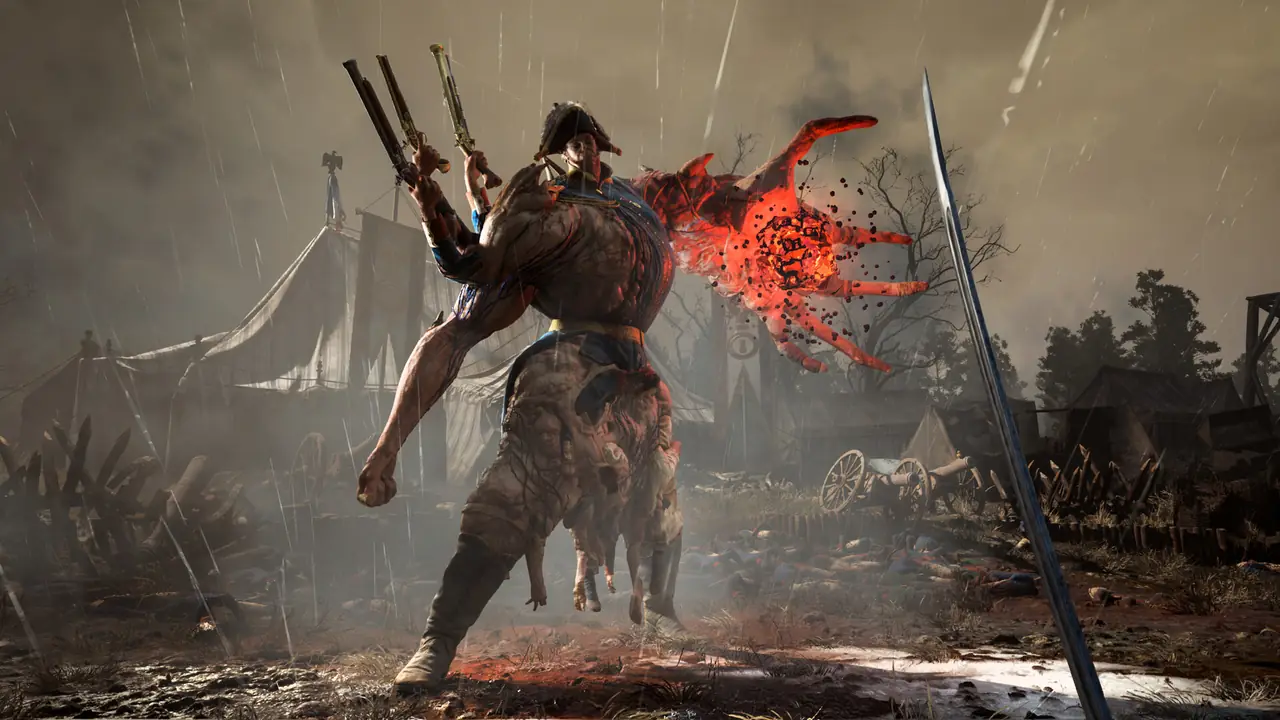
How Valor Mortis Parry and Posture Work
Parrying is the core defensive skill in this first-person soulslike. A well-timed parry damages enemy posture, and broken posture leaves the enemy open to a violent execution. This parry-to-posture loop is the backbone of combat confirmed so far: read the opponent, react at the right moment, break their stance, finish them. GamingBolt's pre-release overview describes the same rhythm — stamina control, timed parries, broken posture, execution.
Perfect parries matter more than ordinary blocks: they create takedown openings, while dodging is the safer tool for learning attack patterns. Stronger enemies chain attacks, so fights become a rhythm of observation and timed answers, with sound and visual distortion telling you how clean each defensive move was.
One honest boundary: no official source has published parry frame data or posture damage numbers as of 2026-10-10. What is confirmed is the system itself — timed parries damage posture, broken posture enables executions — and an older official developer reply summed it up directly: parry causes posture damage while dodging grants mana. If you are stuck on the demo boss, the General Lothaire fight guide shows how this loop plays out against polearm and longsword combos.
Official source: the Steam store page describes parries, dashes, and finishers as the core of the combat, with William rising from a battlefield grave as a soldier of Napoleon's Grande Armee.
Stamina: What It Governs
Stamina management is crucial during combat. Attacks, dodges, and defensive actions all draw from the same pool, so swinging wildly or panic-dodging leaves you unable to answer the next enemy combo. Based on the demo, the practical rule is simple: spend stamina to create openings, keep enough in reserve to parry or dodge the reply.
Stamina is also a buildable stat. William's skill tree includes stamina regeneration, parrying efficiency, and health nodes, all upgraded at Lanterns. Early-game stamina pressure can be eased through these choices, though exact values are not yet confirmed.
Some Ambers trade stamina for power — one known example slows time at the cost of stamina. If you lean on parries, think twice before equipping anything that drains the resource your defense needs. The Amber equip guide explains unlocking and swapping these passives at Lanterns.
Lantern Rules: Rest, Vials and Respawns
Lanterns are the bonfire stand-ins of Valor Mortis. Resting at one replenishes your healing vials, lets you spend progression, and respawns the enemies you already killed. Dying drops your resources where you fell, and you get one shot at recovering them — the genre's classic risk-reward loop.
| Lantern rule | What happens (confirmed so far) |
|---|---|
| Rest to refill | Resting replenishes healing vials |
| Enemies respawn | Resting brings killed enemies back |
| Upgrades happen here | William's stats and skill trees are managed at Lanterns |
| Death drops resources | Fallen resources can be recovered once on the return trip |
| Die again, lose them | Failing the recovery run forfeits the dropped resources |
Because resting resets the area, plan around it: push forward, bank progress at the Lantern, then attempt the hard fight with full vials. New players should read the beginner tips for early-area routing.
Counterattacks That Restore Health
Valor Mortis rewards aggression. Landing an immediate counterattack after taking damage replenishes spent health, which gives you a reason to press forward instead of retreating to heal every time you get clipped. Each blade has its own weight and handling, so the timing and reach of your counterattack changes with your weapon.
This rally-style healing shapes the pace of fights: strike, parry the reply, counter to recover, keep chaining — with melee, scarce firearms, and Transmutation powers flowing together. For the full arsenal, see weapons, guns and Transmutations.
The health-restore window favors fast answers. Practice one simple sequence in the demo: take a hit, parry the follow-up, and counter right away instead of backing off to use a vial.
Executions and Posture Breaks
Breaking posture is only half the payoff — the execution is the other half. When an enemy's stance collapses after sustained posture damage from parries, they are left open to a finishing move. Perfect parries accelerate this by creating takedown openings on their own, which is why skilled play looks like a chain of parry-to-execution loops.
What executions cost, whether they grant brief invulnerability, and how much damage each finisher deals are not yet confirmed as of 2026-10-10. Pre-release coverage confirms executions exist and follow posture breaks, but the numbers must wait for launch testing.
Skill Trees, Catalysts and Amber Slots
There is no standard armor or gear upgrade path. Progression runs through separate skill trees for William and for each weapon, plus two extra layers: Catalysts and Ambers. As the overview trailer breakdown explains, Catalysts are perk points spent to enhance properties such as melee damage, while Ambers are build-altering passives that usually carry trade-offs — one known example lets melee strikes recover more health while removing healing on demand.
| System | What it does (confirmed so far) |
|---|---|
| William skill tree | Core stats: stamina regeneration, parrying efficiency, health |
| Weapon skill trees | Each blade and firearm levels independently |
| Catalysts | Perk points boosting properties like melee damage |
| Ambers | Equippable passives with trade-offs, slotted via tree milestones |
Amber sockets unlock at certain skill-tree milestones, and Ambers are equipped through Lantern interactions. The complete Amber roster and every Catalyst value remain unconfirmed before launch. Step-by-step equipping help lives in how to equip Ambers.
Demo difficulty drew split reactions, with some preview coverage calling the balance uneven. Parry timing, posture thresholds, and stamina costs seen in demo footage may all shift in the release build, so treat every pre-launch number as provisional.
Red-Light Attacks and Weak Points
Not everything can be parried. Mini-bosses use unblockable red-light attacks that must be dodged rather than parried, alongside weak-point targeting that rewards precise aim — including pistol shots at weak points. These encounters test whether you can read behavior, not just whether you can take hits.
The demo's showcase boss, General Lothaire the Eagle-Bearer, shows the multi-phase version of this design: brutal slashing phases escalating into minion summoning and arena-wide interactions. Phase-by-phase help is in the General Lothaire fight guide, and if the whole game feels punishing, difficulty options and tips covers the confirmed single-difficulty approach.
A background note: Valor Mortis comes from One More Level, the studio behind Ghostrunner, per its Steam short description — but this is a first-person soulslike built on parries and posture, not a parkour runner, so none of that game's systems apply. The demo guide covers the now-unavailable Steam demo, and the story primer covers William, the plague, and the Shrike as officially revealed.
What Is Not Yet Confirmed
Exact parry frame windows, posture values per weapon, execution damage and invulnerability rules, the full Amber and Catalyst lists, total boss count, and final difficulty tuning all stay unwritten until the full game can be tested. This page will be updated after the October 13, 2026 launch.
FAQ
Is parrying required to beat Valor Mortis? Based on the demo, parry-to-posture loops are the intended core, and perfect parries create execution openings nothing else offers. Dodging suits learning patterns, but posture breaks come from parries.
How do I restore health without vials? Counter immediately after taking damage to rally back spent health. Certain Ambers also shift healing, such as melee strikes recovering health at the cost of healing on demand.
What happens when I die? Dropped resources stay where you fell with one recovery attempt. Resting at Lanterns refills vials but respawns enemies, so plan recovery runs at full strength.
Do Ambers change parrying? Some do. Confirmed trade-off designs touch stamina and magic, and William's tree has parrying-efficiency nodes — see the Amber equip guide.
Are valar mortis and vigor mortis the same game? No. The game is Valor Mortis (also written valormortis); valar mortis and vigor mortis are unrelated lookalike terms, not this game.
Related
More Valor Mortis Guides
Valor Mortis FAQ: trial, Game Pass, difficulty, length, bosses and spelling answers in one page.
How long is Valor Mortis? About 20 hours per devs, demo length and what affects your playtime.
Is Valor Mortis on Game Pass day one? Yes: Oct 13 on Ultimate and PC Game Pass, cloud and console.
What is Valor Mortis? First-person soulslike from One More Level, out Oct 13, 2026 on PS5, Xbox and PC.
What does Valor Mortis mean in Latin? Valor and mortis explained, plus when the game is set.
Valor Mortis price $39.99, Deluxe $59.99 with story DLC, no pre-orders, physical disc at launch.
Is Valor Mortis on PS Plus? 90-minute Premium trial at launch explained: what carries over and what not.
Valor Mortis PS5 vs Xbox: 60FPS performance mode, dynamic 4K, PS5 Pro and Series S details.